Why Your Grocery Bill Depends on Global Supply Chain Vulnerabilities You Never Knew Existed
Discover how global supply chain vulnerabilities affect your grocery bill. Learn about export restrictions, fertilizer shortages, and shipping disruptions that drive food prices up. Get insights to make smarter food choices.
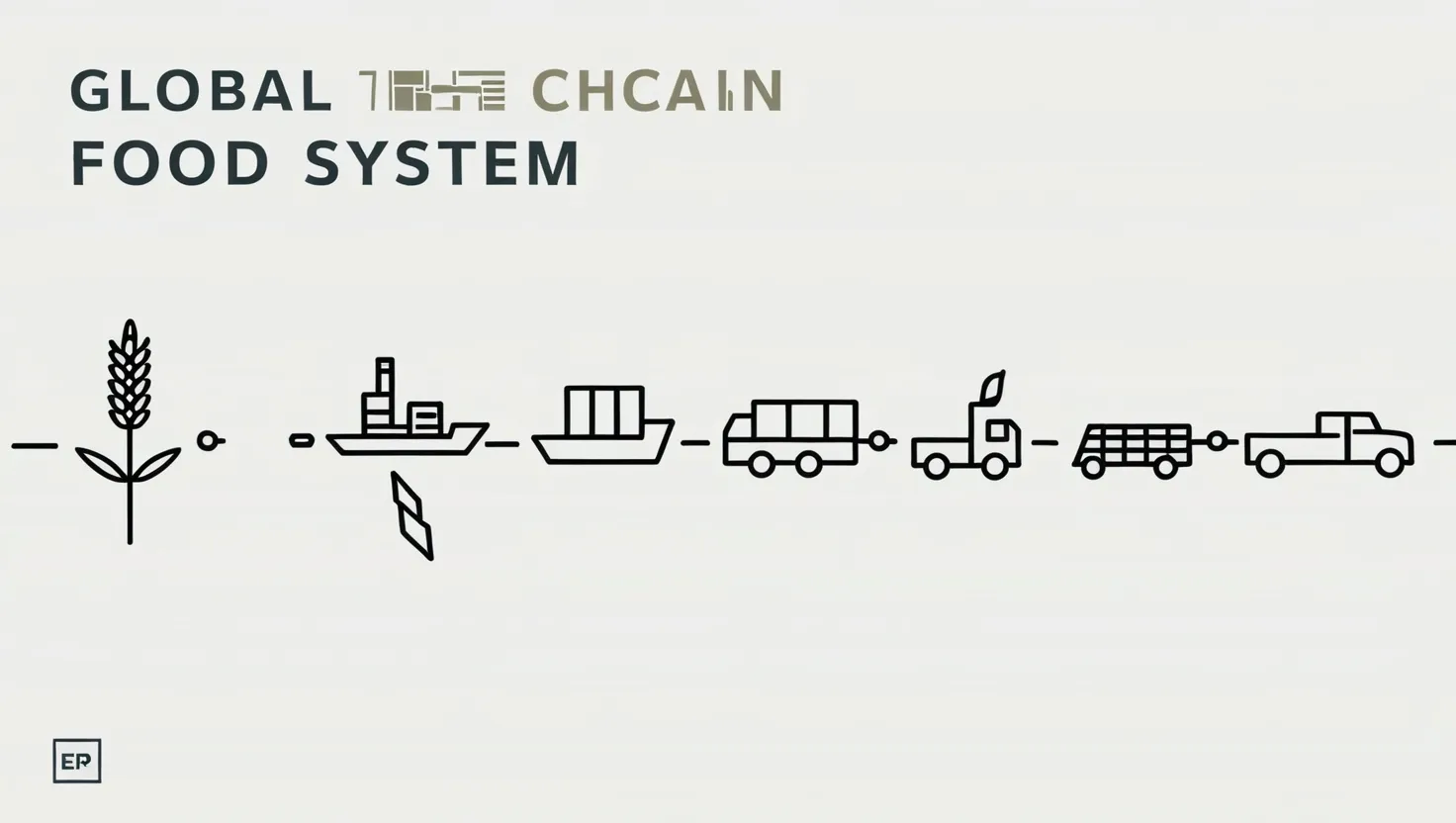
Let’s start with a simple question: Have you ever wondered why the cost of your morning coffee or loaf of bread jumps without warning? It’s easy to blame local factors or fleeting news headlines, but the real story often starts much farther from home. The global food supply chain is a finely tuned machine, yet it’s surprisingly fragile. With each passing year, it becomes more apparent that what happens in distant fields, ports, and processing plants eventually echoes at the neighborhood supermarket. In my work, I’m fascinated by the overlooked weak links in this massive system—links that have a direct impact on what I, and you, pay every day.
We hear plenty about how climate change is shifting weather patterns, but there’s a lesser-known dimension to these disruptions. When a freak drought wipes out grain harvests in Brazil or India, it doesn’t just create an immediate shortage; it shuffles global trade flows in ways that aren’t always obvious. For instance, when India faces a poor monsoon, it might abruptly halt its rice exports to protect domestic supplies. Suddenly, a country on another continent that counts on Indian rice finds itself scrambling for alternatives, and everyone along the chain pays more. This kind of domino effect happens more often than many realize. As the great economist John Maynard Keynes once said,
“The difficulty lies not so much in developing new ideas as in escaping from old ones.”
The “old idea” that food grown far away stays far away just doesn’t hold anymore.
Export restrictions are another silent force shaping your grocery bill. Governments naturally want to protect their own citizens in times of scarcity, but when big players stop shipping out staple goods like wheat or vegetable oils, the shockwaves can be swift and brutal. Russia’s ban on wheat exports or Indonesia’s palm oil embargo in recent years sent global prices soaring overnight. These moves, while understandable from a local politician’s point of view, can worsen global shortages and disproportionately hurt low-income importing nations. Have you ever considered how a political decision halfway across the globe could determine the cost of the oil you use to fry dinner?
Many people don’t realize how much of modern farming relies on fertilizers—and how concentrated their supply chains have become. A handful of countries, including Russia and China, control a huge share of global fertilizer exports. Any disruption, whether due to geopolitical tension or logistical bottlenecks, can raise the cost of nutrients that keep soils productive. During the past few years, sanctions and export restrictions on Russia—a top fertilizer producer—sent shockwaves through agricultural markets. When fertilizer becomes costly or scarce, harvests shrink, prices rise, and, inevitably, the average household feels the strain. I find it striking how something as elemental as plant nutrition—something we barely think about—can ripple through the economy.
“We never know the worth of water till the well is dry.” – Thomas Fuller
If you replace “water” with “fertilizer,” the message rings just as true for today’s food system.
Maritime transport is another underappreciated vulnerability. If you’ve followed the news, you might recall recent headlines about blockages in the Suez or Panama Canals. These chokepoints handle enormous volumes of food, and even a week-long delay can mean spoilage or empty supermarket shelves somewhere far away. Let’s imagine a shipment of fruit gets held up at a major port. By the time it makes its way to your city, the supply has dwindled, demand outpaces arrivals, and prices increase. It’s a vivid reminder that our appetite for fresh, global produce rides on the smooth operation of shipping corridors that are easily disrupted by weather, strikes, or geopolitics.
There’s also a critical, often invisible piece to this puzzle: the concentration of food processing. Major segments—whether in meatpacking, grain trading, or dairy—are handled by a small group of multinational corporations. This might help keep products standardized and costs low under normal conditions, but it creates a problem if one facility or company faces a crisis. We saw this during recent pandemics, when outbreaks in a handful of large meatpacking plants caused shortages and price spikes across entire countries. When so much capacity is in so few hands, a local disruption quickly becomes a global story.
Let’s pause and consider: If a single company or port can affect the diets of millions, what does this mean for our resilience? How can we adapt?
The answer lies partly in diversification—sourcing from more regions, creating redundant processing facilities, and investing in flexible logistics. Another approach is building more transparent supply chains, where every link, from farm to table, is visible and accountable. New technologies, such as blockchain, are beginning to track food origins more reliably, helping prevent fraud and ensuring safety. Food fraud, in fact, is a growing shadow over the supply chain. As pressure mounts and prices rise, unscrupulous suppliers cut corners, mislabel products, or adulterate goods to stretch profits—leaving consumers vulnerable.
“Trust, but verify.” – Ronald Reagan
That advice, though originally aimed at geopolitics, fits the food system perfectly. For every supplier, processor, and retailer, rigorous verification is now as important as trust.
There’s another twist: The current push for sustainable agriculture adds new complexity. While essential to reduce environmental impacts, some initiatives inadvertently increase logistical risks. For example, insisting on only locally produced food sounds prudent, but what happens when local harvests fail? Conversely, international supply chains bring resilience but also expose us to far-off shocks. It’s a tricky balancing act, and there’s no one-size-fits-all answer.
I often ask myself: Are there hidden opportunities within these vulnerabilities? In fact, crises frequently spark innovation. Growing use of vertical farming, urban agriculture, and alternative proteins is partly a response to supply shocks and price volatility. Countries and companies are investing in better storage, transport, and monitoring systems. Consumers, too, are becoming more attentive—reading labels, choosing local when possible, exploring new recipes when favorites are out of stock or unaffordable.
What can I, as a consumer, really do about these big-picture risks? For one, becoming curious and informed about where products come from allows me to make more resilient choices. Supporting diverse, local food systems—when possible—reduces pressure on long global chains. Advocating for transparency and fair practice at every stage nudges companies and policymakers toward more robust, ethical systems.
Is there an ultimate fix to these vulnerabilities? Realistically, no single action will “solve” the supply chain’s fragility. However, recognizing the web of connections means each time I encounter a price hike or an empty shelf, I can trace the story back beyond my local store. I’m less likely to fall for simplistic blame or panic buying. Instead, I see my place—small but real—in a worldwide system trying to adapt to new realities. That sense of context, I believe, is empowering rather than daunting.
“Food is national security. Food is economy. It is employment, energy, history. Food is everything.” – José Andrés
This perspective reminds me that food isn’t just calories or convenience; it reflects the state of our world. By paying attention, asking questions, and staying flexible, I become part of a broader movement toward a more secure, fair, and sustainable supply system—even if that journey is full of bumps and surprises.
So, next time the price of your weekly groceries makes you pause, think about the field worker in Brazil, the shipping crew crossing the canal, the scientist blending fertilizers, and the regulator weighing export bans. The chain is only as strong as each of its links, and each one tells a story worth knowing.