How Renewable Energy is Transforming 5 Major Industries Beyond Solar Panels
Discover how renewable energy is transforming 5 major industries beyond solar panels. From oil giants to banks, see strategic shifts reshaping business models and competitive advantages.
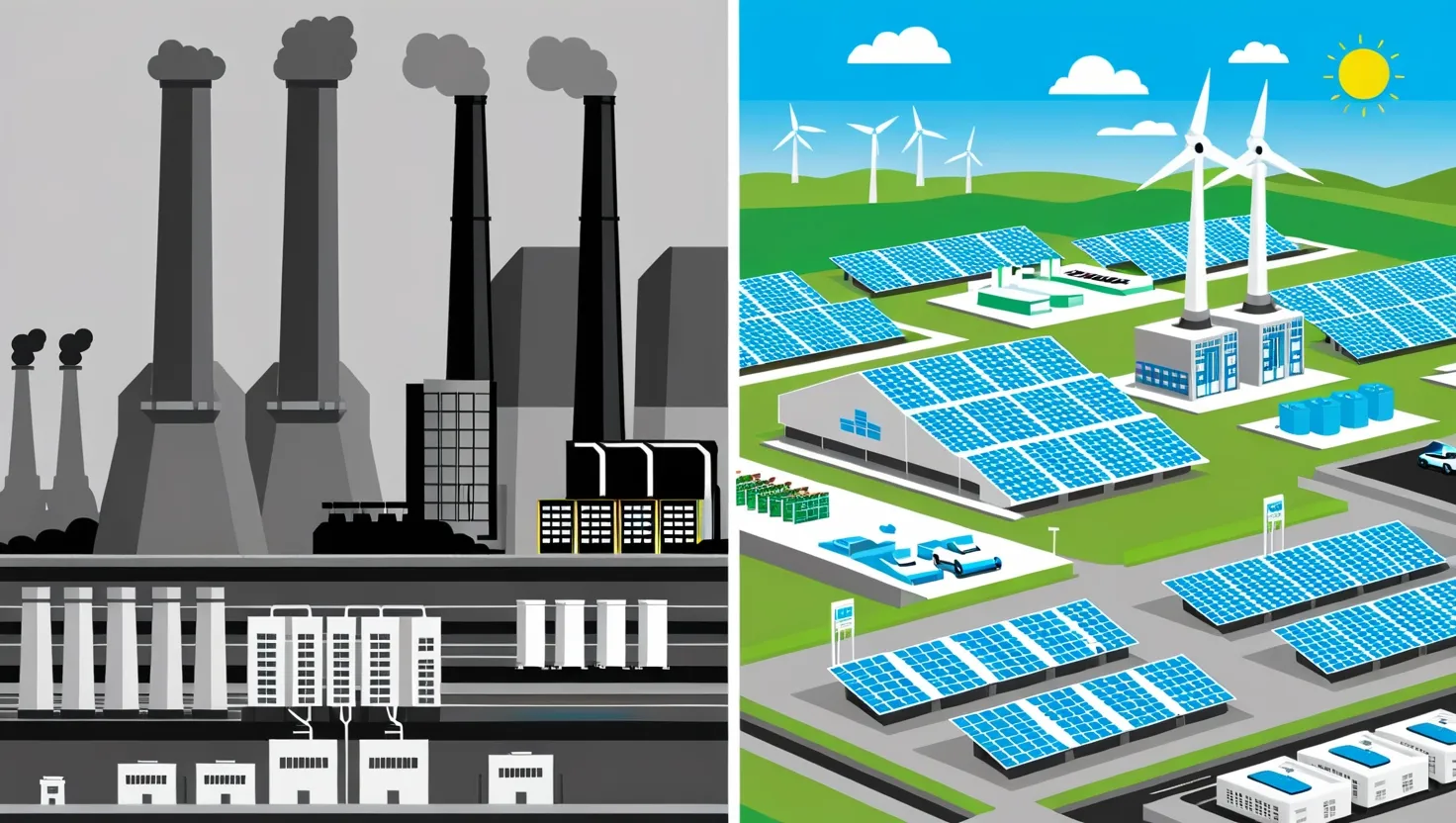
If I asked you where the power in your home or office comes from, you might picture smokestacks and fuel-burning plants far away. But what if I told you that scene is changing, and the very core of how entire industries operate is shifting—sometimes in surprising ways? The march towards renewable energy is more than just a matter of plugging solar panels onto a few roofs or building bigger wind turbines. It’s a transformation that seeps deep into the business strategies, investments, and day-to-day realities across sectors you might never associate with wind and sun.
Let me walk you through five vast, sometimes unexpected, ways that renewable energy isn’t just playing a supporting role—it’s actually rewriting the rulebook for how industries compete, innovate, and even survive.
Here’s one you may not have guessed: traditional energy giants, the very names synonymous with oil and gas, have become major players in solar and wind. Now, this isn’t just about public image or ticking a sustainability box. It comes down to future-proofing their business models. If demand for oil and gas is projected to decrease, then the companies who generate our energy need to ensure they still matter. Take, for example, how some oil majors are investing heavily in offshore wind farms, leveraging their expertise with offshore installations and large-scale engineering learned from decades in fossil fuel extraction. Rather than seeing renewables as a threat, these companies see a new revenue stream—one that can make use of their ships, rigs, and workforce in ways never imagined in the fossil fuel heyday.
“Progress is impossible without change, and those who cannot change their minds cannot change anything.” — George Bernard Shaw
It isn’t enough to generate power only when the sun shines or the wind blows. That’s why technology firms are racing to master grid-scale battery storage. This cutting-edge field is a blend of chemistry, data analytics, and big thinking, aiming to solve the riddle of storing excess power for when it’s needed most. Some of the most impactful advancements stem from outside the traditional energy sector, with firms better known for consumer electronic gadgets now building enormous battery banks, even leveraging artificial intelligence to predict energy needs and balance grid loads. These solutions help prevent blackouts and stabilize fluctuating renewable supplies, but they’re also sparking collaboration—think auto manufacturers and energy companies working hand-in-hand, once a rare alliance.
Let’s zoom in on the automotive industry. Electric vehicles are the obvious headline, but the biggest story might be happening away from the showroom. Hundreds of billions are being poured into building out the infrastructure that makes EVs practical: charging networks that stretch across countries, ultra-fast charging stations in city centers, and partnerships designed to make this as seamless as filling up at a gas pump. When an auto manufacturer invests in charging infrastructure, they are not just selling cars—they’re creating an ecosystem, turning mobility from a product into a service. The competitive edge here is as much about convenience and reliability as about horsepower or design.
“We cannot solve our problems with the same thinking we used when we created them.” — Albert Einstein
Heavy industry often flies below the radar, but if you tour a modern factory, you might be surprised to see solar panels on the roof and wind turbines on the perimeter. The reason is both simple and transformative: generating renewable electricity on-site can slash operation costs, shield companies from volatile energy prices, and give them a powerful story to tell environmentally-conscious customers. But there’s more to it. By integrating renewables directly into their processes, manufacturers gain flexibility—they can time energy-intensive tasks to coincide with peak generation, use advanced software to automate these decisions, and even sell excess power back to the grid. For these companies, sustainability and efficiency are two sides of the same coin.
“Do not go where the path may lead, go instead where there is no path and leave a trail.” — Ralph Waldo Emerson
Financial institutions, often portrayed as conservative and risk-averse, are quietly shaping the world’s energy future. As early as a decade ago, the bulk of global energy investment was still directed toward expanding fossil fuel supply. Now, the biggest banks and investment funds are staking bold positions in renewables: financing large-scale solar farms, backing innovation in hydrogen, and tying lending rates to clients’ sustainability performance. It isn’t just about following trends; it’s about managing risk. Stranded assets in coal or oil can sour a portfolio, whereas a well-timed play into green technology can reap rewards for decades. Some funds are even creating entirely new financial products—like green bonds—to channel trillions into clean energy, making ESG concerns central to competitive strategy.
If you’re in business, these changes present challenges, but they also surface opportunities. Companies making early moves into renewable energy are often rewarded with lower operating costs, greater supply chain resilience, and the cachet of sustainability—a trifecta that strengthens their market positioning. For example, automakers pioneering EV infrastructure are seeing new types of revenue, from subscription services to partnerships with tech giants. Companies implementing onsite solar or wind can recoup investments faster than many anticipate, especially as technology costs continue to drop and incentives pile up.
But it’s not all sunny skies. Building out new energy sources at scale brings headaches—navigating a patchwork of regulations, dealing with the intermittent nature of renewables, and scaling up technology fast enough to meet demand. Some businesses face tough internal decisions, needing cultural shifts that go well beyond technical adaptation. The regulatory landscape can be confusing and sometimes contradictory, forcing businesses to become experts not just in their own sector, but in energy law and local politics.
So what does this mean for real people—employees, consumers, communities? One effect has been a reshuffling of job creation patterns. While traditional fossil fuel industries still provide many high-paying roles, jobs in renewables are growing far faster. Demand for engineers, project managers, installers, and grid specialists soars as new solar farms and wind arrays come online. In many cases, the skillsets are transferable, turning former oil rig workers into wind turbine technicians or battery system operators. This transition demands training and flexibility, but it also broadens the economic base, spreading opportunity into regions that may have struggled under the old models.
Let me ask you: How does your business or career fit into this shifting landscape? Are you treating renewables as a compliance hassle, or a chance to leap ahead? What pieces of your operation could benefit from lower energy costs, or from being associated with true sustainability? Could collaboration with an unexpected partner—maybe a tech firm, or a financial institution—open up new avenues?
To compete in this new reality, it isn’t enough to wait and see. The leaders are those who seize energy transformation as both a strategic imperative and a creative challenge. They aren’t just following regulations; they’re shaping their industries, writing new rules, and sometimes even creating entirely new markets. The question is not who will adopt renewable energy, but who will use it most cleverly—and how that decision will define the winners and losers of the next decade.
“The best way to predict the future is to invent it.” — Alan Kay
If you step back and look at the map of global innovation today, the fingerprints of renewable energy are everywhere—from the balance sheets of banks to the blueprints of automakers, from the boardrooms of oil companies to the operations manuals of factories. The change isn’t always obvious, and it’s rarely easy. But for those willing to ask tough questions, experiment boldly, and think beyond the usual boundaries, this new energy era offers not just challenges, but tremendous rewards. Where will you take your role in this story?