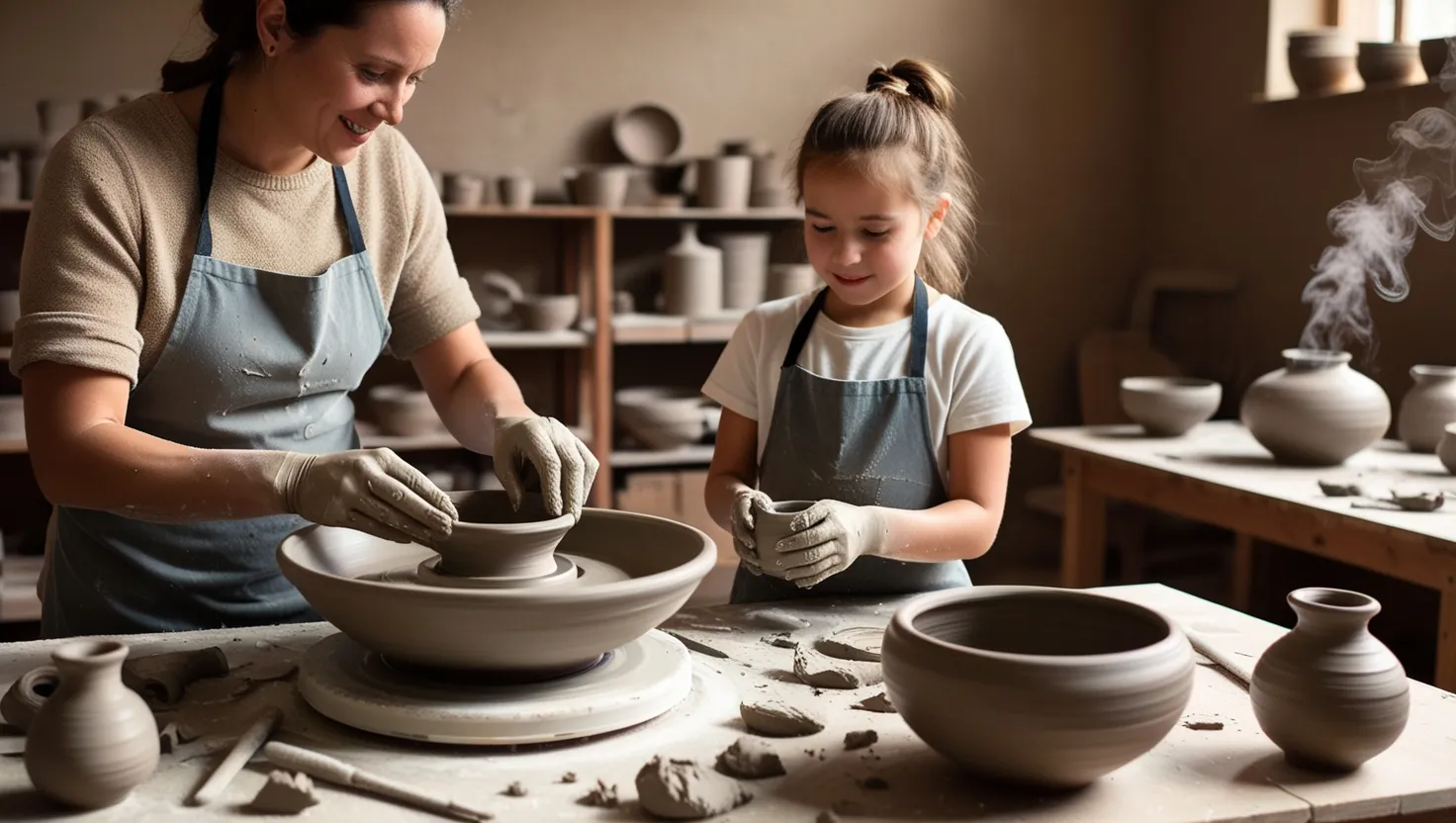
Imagine standing in a bustling studio as the scent of freshly turned earth wafts through the air, your hands sinking into cool, damp clay. It’s a feeling that’s part memory, part possibility. Every creation, whether small cup or imposing vase, starts this way—a vague idea shaped through collaboration, experiment, and above all, resilience.
What fascinates me is how ceramics—ancient yet continually fresh—speak not just of durability, but of the ways we adapt and thrive even as materials and traditions evolve. That’s what I find most powerful in the idea of Potter Maya and her daughter, blending local clay with store-bought in search of strength neither could offer alone. What drives them to experiment? Is it curiosity, necessity, or the simple joy of doing something together?
When I think about clay, I recall a line by Pablo Picasso: “Every act of creation is first an act of destruction.” Ceramics illustrate this beautifully. You break the solidness of earth, mix and meld, demolish boundaries between materials, and then risk everything in the furnace’s heat. For Potter Maya and her daughter, it’s not just technical—it’s an act of trust. Each blend is a gamble. Will it crack? Warp? Or emerge stronger, more radiant, and unique?
Digging into the history, I learned that ancient Maya potters built every vessel by hand. The process required not just technical skill, but a keen sense for which clays—and which additives—would survive the kiln’s intensity. Sometimes, they used volcanic ash brought from distant lands. This was diversification long before the word came into fashion. What if, I ask, every family tradition was quietly teaching us the same lesson—combine, adapt, and outlast adversity?
“We are like clay. We can be molded into beautiful objects, but only if we’re willing to withstand the heat.” These words by author Les Brown subtly capture resilience and transformation. Working with clay, I’m reminded that each mixture is a little story of risk—a dialogue between chemistry and hope.
Let’s consider diversification. The term is often reserved for banks and investors, but as a ceramic artist, I see it as the core of creativity. Mixing local clay—sometimes gritty, unpredictable—with refined store-bought types is an act of confidence in difference. Could it fail? Absolutely. The local flavor may be too coarse, the store version too sterile. But the magic often lies at the edge of comfort, in blends that push both the material and the maker.
In their shared craft, Maya and her daughter aren’t just producing stronger pots; they’re building resilience into every molecule. I think of Maya’s background—her connection to nature, a fascination with capturing illusion in her pottery. The idea of “oneness with your hands” keeps coming to mind, as if craft itself is a way to bind together not just clay, but families and philosophies.
What makes two generations work side by side in the studio? Is it tradition, or is there something deeper at play—a way to pass on a problem-solving mindset? When I watch younger hands try mixing clay for the first time, the questions come fast and spontaneous. Can I add more water? Why does this crack here? Each answer carries seeds of resilience, the kind that can only sprout when mistakes are welcome.
Winston Churchill once said, “Success is not final, failure is not fatal: it is the courage to continue that counts.” Potter Maya’s story reminds me how creation and courage are intertwined. The kiln’s heat is relentless. Weaknesses in the blend will show. Some pieces will shatter. Yet the process itself becomes its own lesson—a quiet promise that strength can be found in unexpected partnerships.
Ceramics have a peculiar way of connecting the past with the present. Take the idea that Maya’s daughter mixes clay with her mother, learning not from books, but from shared routine. The act becomes both simple and profound—a living history, told in fingerprints. Sentiment, memory, experiment. I can’t help but wonder: What silent stories linger beneath the glaze?
Curiously, mixtures weren’t always about strength. Some ancient techniques aimed for sound, not durability. I’ve learned about vessels that rattled and chimed, designed for celebration rather than utility. So why do modern potters prize strength over music? Perhaps the answer is somewhere in how we value endurance today—our need to feel unbreakable, even as we know that fragility is a part of life’s fabric.
Resilience is never just physical. Clay, like character, becomes strong through stress and variety. When Maya and her daughter combine the local grit with refined store-bought clay, they’re acting out a philosophy of embracing difference. Every blend is a negotiation—not just with chemistry or heat, but with expectation, hope, and the specter of failure.
I remember reading that some of the best ceramics are cherished not for their perfection, but for their flaws. The Japanese art of kintsugi repairs broken pottery with gold, highlighting the cracks rather than hiding them. What does this say about the way we approach diversity, collaboration, or failure in our own lives? Does the pursuit of resilience mean hiding the seams, or celebrating them?
Albert Einstein wrote: “The important thing is not to stop questioning. Curiosity has its own reason for existing.” Craft is built on questions as much as on answers. What if we blend this with that? How much heat is too much? Is strength always the goal, or can beauty sometimes emerge from weakness?
I’ve found that ceramics is taught as much by mistakes as by success. Maya’s journey—from improvising with nature to experimenting with blends—is full of trials. Are some mixtures too risky? Does failure teach more than victory? Watching others learn by doing reveals how shared craft becomes a laboratory for resilience.
Pottery also asks us to reconsider value. A vessel that resists breaking in the kiln may be prized, but what about the joy of discovery, the satisfaction in making? The patience needed to wait for a glaze to cool, the careful touch at the potter’s wheel—each moment is a lesson in adaptation. Are there lessons here we can take into other areas of life? How often do we strike a balance between tradition and innovation?
The blend of local and store-bought clay is a metaphor as much as a technique. It’s a way of saying that strength doesn’t have to come from purity, but from the dialogue between differences. Just as Maya’s pots gain resilience from mixture, so do relationships, families, and communities. Does this principle hold in other crafts? What happens when we combine the old with the new, the familiar with the foreign?
Frank Lloyd Wright once captured the spirit of the process: “The longer I live the more beautiful life becomes.” Pottery, like life, becomes richer through diversity, shared effort, and the willingness to risk cracks in search of strength.
There’s an endless fascination to watching generations work together: Maya’s daughter brings new questions and perspectives, while Maya offers experience and guidance. Is wisdom passed down, or rediscovered in every batch? The answer is likely both. Strength—like craft, like resilience—finds its best form through shared hands, open minds, and the heat of honest effort.
I am drawn most to the quiet drama of the kiln. Will a new blend thrive or fail in the fire? Each attempt carries hope and risk. The lessons taught through clay—mix, adapt, endure—echo far outside the studio. What if we approached every challenge this way, blending resources and perspectives until strength revealed itself unexpectedly?
In every clay mixture, in every collaborative project, I see the echo of an older truth: strength is never singular. It’s born in partnership—between materials, between generations, between ideas. Maya and her daughter’s story isn’t just about ceramics. It’s a window into how we build resilience: not by refusing to break, but by learning what holds us together when tested.
So next time I stand over a lump of clay, hands ready to shape, I’ll ask: What can I combine for greater strength? Where do diversity and risk lead not to fragility, but to the kind of resilience that survives the kiln and stands, unbroken, for years to come?
As Rainer Maria Rilke writes: “The only journey is the one within.” Pottery—like life—asks us to blend, withstand, and celebrate the strength that difference brings. The kiln’s heat will always test. The hands, together, can always rebuild.