Currency Manipulation: How Nations Game the Global Trade System
Learn how currency manipulation impacts global trade, economic opportunities, and consumer prices. Discover the tactics nations use to gain competitive advantages, from devaluation to market intervention, and understand the economic ripple effects on international markets. Read more now.
When we talk about global trade, currency manipulation is one of those topics that feels like it’s happening behind the curtain—a quiet but profound influence on international transactions. It’s easy to get lost in macroeconomic jargon or assume this is just a problem for policymakers to grapple with. But here’s the thing: the value of money impacts trade balances, jobs, inflation, and even geopolitical relationships. Those shifts can ripple straight into the prices consumers pay or the economic opportunities they get. So how do nations use currency manipulation to tweak the rules of trade in their favor? Pull up a chair; let’s talk about it.
“Money often costs too much.” – Ralph Waldo Emerson
One of the most obvious tactics is deliberate currency devaluation. If a nation weakens its currency, its exports suddenly look a lot cheaper to the rest of the world, boosting demand for its goods. A weaker currency also makes imports more expensive, nudging citizens to buy locally produced alternatives. It’s a strategy that can supercharge export-driven economies—but at what cost? Other nations might view it as a form of economic aggression. After all, one country’s “cheap goods” could mean another country’s factory closures. Have you ever wondered how far a government might go to ensure its products remain competitive on global shelves?
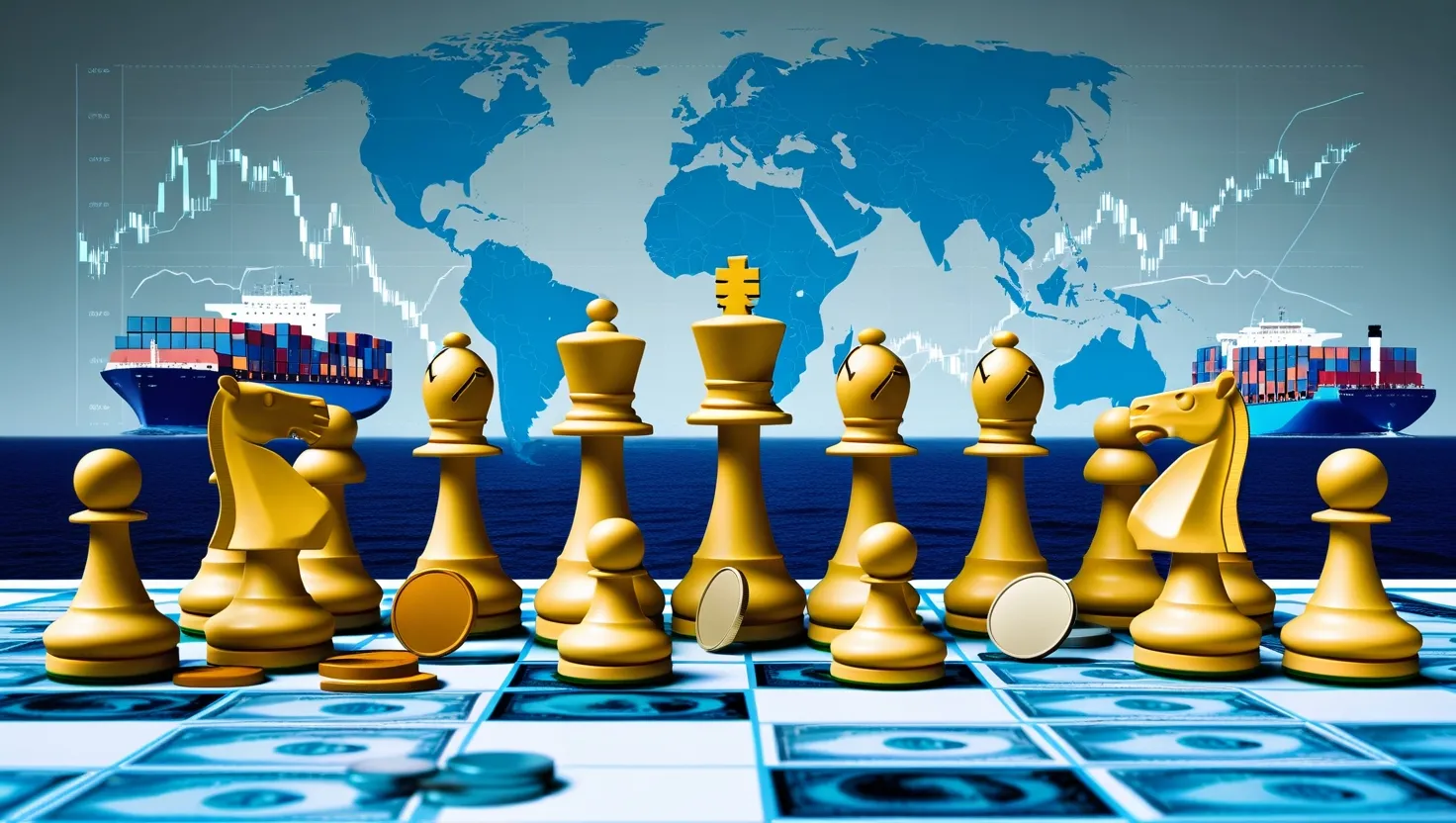
Less discussed, but equally impactful, is the accumulation of massive foreign reserves. When central banks buy foreign currencies in bulk, they’re essentially suppressing the value of their own currency. What’s fascinating here is the sheer scale of this practice—some nations hold reserves worth hundreds of billions of dollars. It’s like playing chess with money as the pieces, lining up to control the game. But let’s think about the ripple effects: how does this hoarding distort currency markets and fair competition for smaller economies?
Here’s a question to chew on: Is manipulating currency more about defending domestic interests or dominating global markets? The nuance lies in how it’s framed.
“An investment in knowledge pays the best interest.” – Benjamin Franklin
Now, let’s move to interest rate policies. Central banks tweak interest rates to drive exchange rate adjustments—a move that doesn’t always scream manipulation but can certainly nudge currency values. A lower interest rate makes a country’s assets less attractive to foreign investors, which can weaken its currency naturally. Conversely, higher rates can attract a torrent of international capital, strengthening the currency. Imagine the precision required to use these levers without destabilizing your own economy. And it raises another question: At what point does legitimate monetary policy turn into covert manipulation?
Direct intervention in currency markets is less subtle. This involves a government outright buying or selling its currency to control its value. Think about it like this: you’re bidding in an auction, but suddenly someone with limitless funds enters the room, skewing the dynamics. That’s what countries effectively do when they intervene aggressively. Do you think a global mechanism should exist to prevent this, or is it everyone for themselves?
“Economics has never been a science—it is a way of looking at the world.” – John Kenneth Galbraith
Not all tactics are overt, though. Capital flow restrictions are one of the stealthier tools in the kit. By controlling how money moves in and out of an economy, governments can influence their currency’s supply and demand. Imagine a tap that can control the flow of capital to such a degree that it reshapes an entire market. While this helps governments stabilize their economies internally, it can frustrate foreign investors and spark trade tensions. Ever thought about how these measures might affect entrepreneurs seeking to operate across borders?
Finally, there are covert practices cloaked in the guise of legitimate policy. This is where currency manipulation gets especially murky. A policy could be sold as necessary for economic stability, but its underlying goal might be entirely self-serving. The ambiguity complicates scrutiny. How do you prove intent? If subtle currency manipulation was hidden in plain sight, would international watchdogs even catch it in time?
“Trade is not about goods. Trade is about information. Goods sit in the warehouse until information moves them.” – C.J. Cherryh
These tactics combine to create a tangled web that’s hard to untangle. Retaliatory measures often follow, leading to higher tariffs, escalating trade wars, and strained international relations. The economic impacts then trickle down to households, where consumers face higher prices and reduced choices. So while nations battle it out over currencies, citizens are often left holding the bill.
But here’s where the conversation pivots: How do we define fair trade conditions in a world so interconnected yet so competitive? Should there be stronger cooperation between bodies like the WTO and IMF to combat these practices, or would such enforcement infringe on a country’s economic sovereignty? It’s not an easy balance to strike.
“Measure what is measurable, and make measurable what is not so.” – Galileo Galilei
Understanding currency manipulation underscores how interconnected the global economy truly is. Each tactic, whether blatant or discreet, reveals the lengths to which nations will go to secure an edge. It’s a reminder that currency is more than just a tool of exchange; it’s a weapon, a shield, and sometimes, a bargaining chip. Would you call it strategy or exploitation? That answer might depend on which side of the trade imbalance you’re sitting on.